


Baby Sleep Schedule Generator: Build Your Baby's Schedule
Answer a few quick questions and we'll create a sleep and feeding schedule tailored to your child's age and current developmental stage — from the team that knows infant sleep best.
When is your child's birthday?
We use this to find the right sleep and feeding schedule for their exact age and stage.
How many naps does your child take a day?
A rough average is perfect — we know it varies day to day.
Is your child eating solids?
This helps us tailor the feeding side of the schedule.
Do you currently use Nanit?
This helps us point you to the schedule experience that fits you best.
Takes less than a minute. We'll build your personalized schedule right below.
Your baby's sleep & feeding schedule
How to Use Our Sleep Schedule Generator
A good night's sleep is invaluable—and this is true for your little one, too. In just a few clicks, we'll build a baby and toddler sleep and feeding schedule, tailored to your child's unique needs and current developmental stage — covering everything from wake time to bedtime. Everything in the tool was created in collaboration with our team of certified pediatric sleep experts, so you can rest assured your schedule is designed to give your baby the very best sleep.
Answer a few quick questions
Tell us your child's birthday, nap count, whether they've started solids, and if you use Nanit. We use the birthday to pinpoint their exact age and stage.
Get your matched schedule
We instantly show the right schedule for your baby's age, naps, and feeding stage — with nap times, wake windows, and bedtime.
Make it yours
Treat it as a flexible daily framework. Follow your baby's cues, adjust as needed, and revisit it as they grow or move through a regression.
Sleep needs by age
A skimmable guide to how much sleep your baby or toddler needs at each stage — and how those hours tend to split between night sleep and naps.
- NapsNo set number
- Nap length30 min–2 hrs
- Night sleepIn short stretches
- RhythmEat, change, sleep, repeat
- Naps3–4 a day
- Daytime sleep1.5–4 hrs
- Nap length30 min–2 hrs
- Night sleepLonger stretches form
- NapsDown to 2 a day
- Daytime sleep1.5–3 hrs
- Nap length30 min–2 hrs
- Night sleepMost of the total
- NapsDown to 1 a day
- Daytime sleep1–3 hrs
- Nap length1–2 hrs
- Wake before bed3.5–5 hrs
Nap counts, lengths and daytime totals are drawn from Nanit's guide, How long should babies nap? Total 24-hour ranges reflect general pediatric sleep recommendations. Every baby is different — use this as a starting point, not a rulebook.
FAQs
How do I get my baby on a sleep schedule?
Start by anchoring the day with consistent wake-up and bedtimes, then build naps around age-appropriate wake windows, which allow your baby to comfortably stay awake between sleeps. Getting outside in natural daylight, especially in the morning, is one of the strongest signals for developing your baby’s circadian rhythm. Our generator gives you an age-matched starting point so you’re not guessing. Keep the routine predictable for a week or two and watch your baby’s cues, since consistency is what helps a schedule stick.
When should I start a sleep schedule for my baby?
In the newborn stage (0 to 3 months), sleep is driven by feeding and is naturally irregular, so a loose rhythm is more realistic than a strict schedule. Even now, gentle daylight together during the day helps your baby’s circadian rhythm mature. Around 3 to 4 months, as sleep begins to consolidate, most babies are ready for a more predictable nap and bedtime structure. The generator adjusts its recommendation to your baby’s exact age and stage.
How do I fix a baby's sleep schedule that’s off track?
Travel, illness, and sleep disruptions can throw things off, and that’s normal. Reset by returning to age-appropriate wake windows and a consistent bedtime for a few days, and protect the first nap of the day as your anchor. Morning sunshine helps re-cue the circadian rhythm, which is especially useful after travel. Pull up your baby’s current age schedule from the generator to re-baseline, then adjust gradually rather than all at once.
How does the schedule change as my baby grows?
Quite a bit. As babies grow, wake windows lengthen, total daytime sleep shrinks, and naps drop, going from 3 to 4 naps in early infancy, to 2 naps in the second half of the first year, to a single midday nap by the toddler years. Maintaining daytime light exposure and time outdoors supports a strong circadian rhythm at every age. That’s why the generator routes you to a schedule for your baby’s current month, and why it’s worth revisiting every stage.
What should I do if my baby won’t follow the schedule?
Treat the schedule as a flexible framework and a guide, not a rulebook. If your baby consistently resists a nap or bedtime, the timing may be slightly off for their stage. Try shifting wake windows by 15 to 20 minutes and follow their sleepy cues, like yawning, fussiness, or looking away. Plenty of outdoor daylight earlier in the day can also help them settle at night. If sleep struggles persist, your pediatrician is always the best next step.
Month-by-Month Content Directory







Contributors
Natalie Barnett, PhD serves as VP of Clinical Research at Nanit. Natalie initiated sleep research collaborations at Nanit and in her current role, Natalie oversees collaborations with researchers at hospitals and universities around the world who use the Nanit camera to better understand pediatric sleep and leads the internal sleep and development research programs at Nanit. Natalie holds a Ph.D. in Genetics from the University of New England in Australia and a Postgraduate Certificate in Pediatric Sleep Science from the University of Western Australia. Natalie was an Assistant Professor in the Neurogenetics Unit at NYU School of Medicine prior to joining Nanit. Natalie is also the voice of Nanit's science-backed, personalized sleep tips delivered to users throughout their baby's first few years.
Dr. Maristella Lucchini serves as Senior Clinical Researcher at Nanit. In her role, Maristella works to secure grant funding in collaboration with Nanit's university research partners and supports the development of the company's research collaborations around the world. Previously, Maristella served as an Assistant Research Scientist in the Division of Developmental Neuroscience, Department of Psychiatry at Columbia University Irving Medical Center where she led projects across several cohorts focusing on prenatal and perinatal health. Maristella holds a Ph.D. in Biomedical Engineering from Politecnico di Milano.
Schedule Set. Now See How They Actually Sleep.
The Nanit Smart Baby Monitor System is more than a monitor. It is the tool that helps you put your new sleep schedule into practice. Its bird's-eye HD camera delivers crystal-clear video, night vision, and real-time environmental tracking to ensure your baby is sleeping in the ideal environment.
For families who want to see how their schedule is performing, our Nanit Insights plans unlock professional sleep tracking, cry detection, and a personalized Sleep Score. Backed by the pediatric sleep experts at Nanit Lab and trusted by over 15,000 parents, it is the data-driven support you need to refine your baby's sleep journey.
Explore our Best Sellers
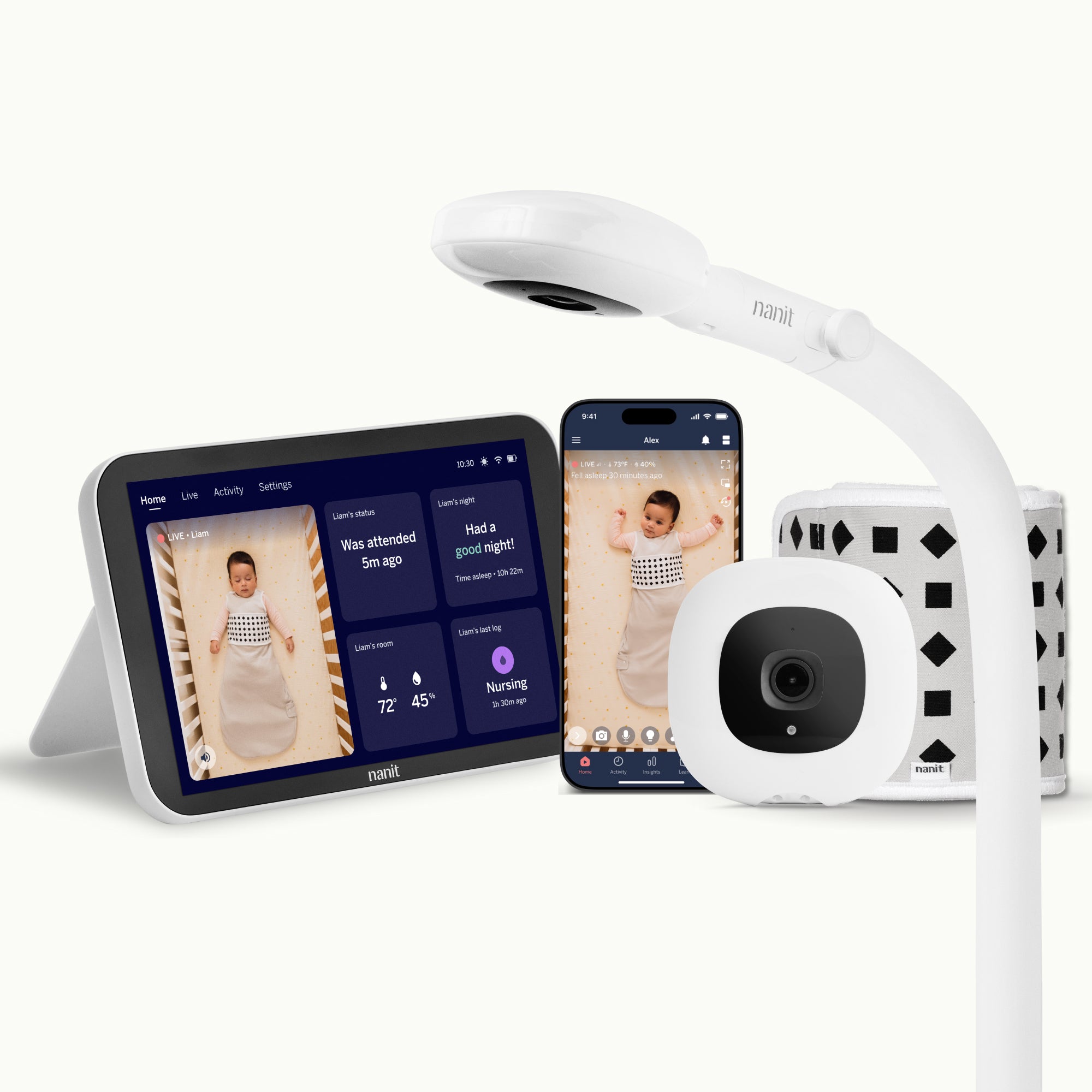
Smart Baby Monitor System
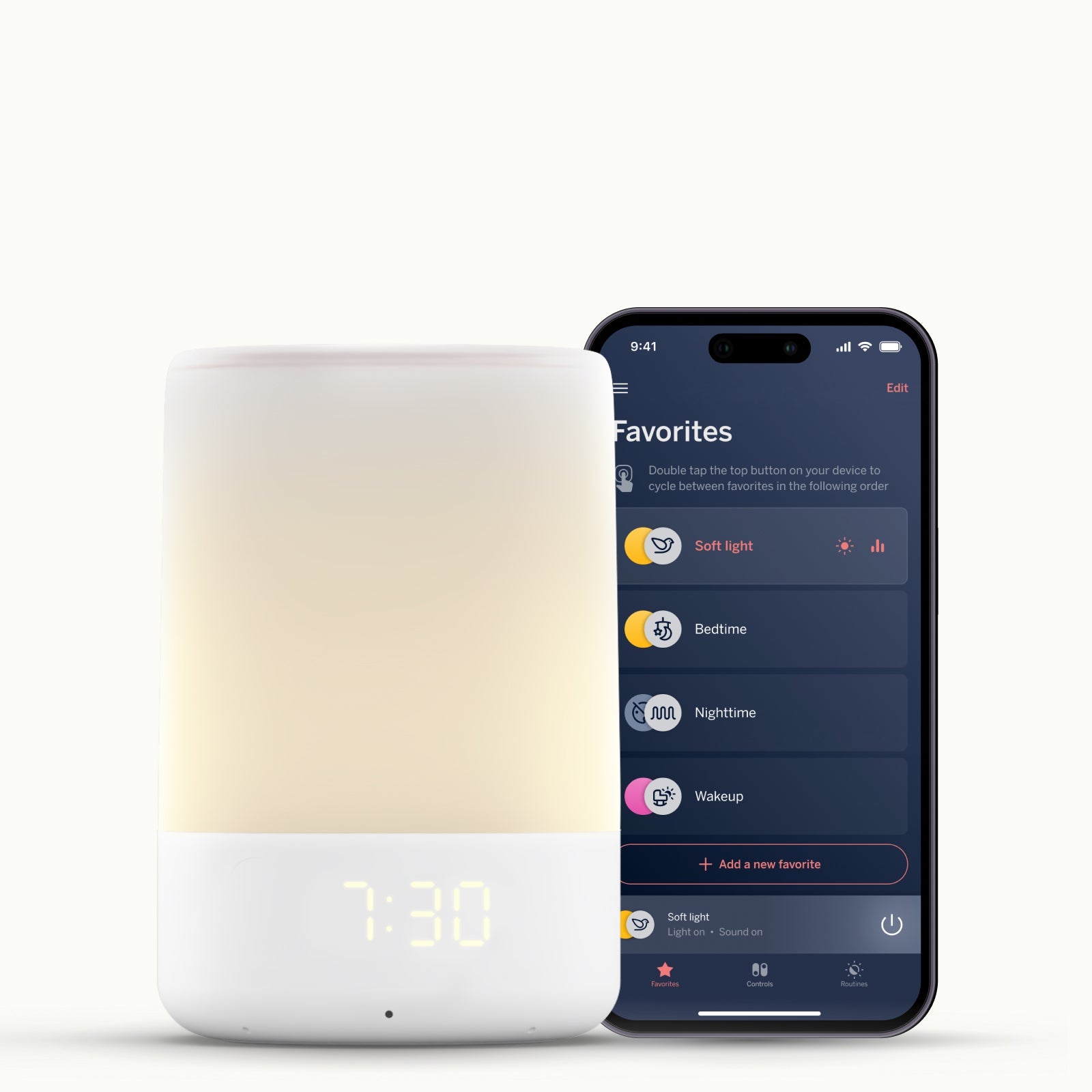
Sound + Light Machine

Bundles