


Holiday travel with a baby often makes even experienced travelers feel like they need to pack the entire nursery—especially when flight delays, unfamiliar sleep environments, and well-meaning relatives enter the picture.
However, you don’t need to recreate your home nursery perfectly on the go. It’s just a matter of prioritizing gear to preserve the core routines and comfort supplies that help you and your baby rest easier.
This practical guide helps you cut through the overwhelm with a streamlined travel with a baby essentials checklist, covering exactly what to keep in your travel-day bag, what to tuck into your checked luggage, and what you can safely buy or borrow when you land.
Key takeaways
-
Tailor your packing list to your travel method, your baby’s developmental stage, and what you can safely buy, rent, or borrow at your destination.
-
Organize essentials around five core needs: safe transportation, diapering and clothing, feeding and cleaning, sleep, and health and travel documents.
-
Keep enough feeding, changing, comfort, medication, and first-night supplies accessible to handle an unexpected delay.
-
If you’re flying, check TSA screening requirements and your airline’s baggage and gate-checking policies separately, since they govern different parts of the journey.
-
Once you arrive, confirm your baby’s safe sleep setup and perform a quick safety sweep of the accommodation.
Before you pack, make four decisions to shrink the list
Before pulling out suitcases, consider these four questions to streamline your baby packing list right from the get-go:
-
How are you traveling? Road trips, train journeys, and flights present distinct space limits, safety requirements, and what you’ll need during the journey.
-
What is available at your destination? Confirm whether your accommodations offer things like a verified crib, fitted sheet, blackout solution, high chair, or laundry access.
-
What developmental stage is your baby in? Tailor supplies to your baby's current feeding style, mobility level, accustomed sleepwear, and routine medical care.
-
What can you get upon arrival? Determine which bulky essentials, such as diapers, wipes, and formula, can be purchased locally.
Creating a single baby travel checklist that you can share with other caregivers can help you figure out these answers quickly. You can even assign categories to each person involved to avoid issues like duplicate gear and missing items.
Travel with a baby essentials: The complete holiday checklist
Once your logistics are set, packing comes down to supporting your baby’s core daily routines.
Use this streamlined checklist to help you prepare what you need across five essential areas without bringing unnecessary gear along for the ride.
1. Safe transportation and mobility
-
Car seat and accessories: Bring an age- and size-appropriate car seat with clear certification labels and installation instructions. If possible, practice securing the harness and installing the seat in unfamiliar vehicles before your departure day.
-
Stroller or carrier: Select a compact stroller, an ergonomic baby carrier, or both, depending on your travel route and whether you need hands-free mobility. Consider a durable travel bag or weather shield to protect your stroller during gate checking at the airport.
2. Diapering and clothing
-
Diapering supplies: Pack enough diapers and wipes for transit, a realistic delay, and the first morning at your destination. Consider also including diaper cream, a foldable changing pad, disposal bags, and a waterproof wet bag for soiled items.
-
Transit and destination clothing: Place two complete outfits for your baby and one fresh shirt for yourself in your carry-on bag for quick changes. Pack versatile, layerable clothes for the remaining days, and reduce total quantities if laundry facilities are accessible.
3. Feeding and cleaning
-
Feeding equipment: Gather items matching your baby's specific feeding needs, whether that includes a nursing cover, breast pump components, cooler packs, milk storage bags, or formula and bottles. Prepare a ready-to-use feeding kit in your carry-on bag and store extra bulk supplies in checked baggage.
-
Cleaning and solid tools: Bring burp cloths, bibs, a travel-sized bottle brush, a compact drying setup, and familiar eating utensils. Cleaning gear ensures you can maintain hygienic feeding practices in hotel sinks or shared kitchens.
4. Sleep essentials
-
Safe sleep setup: Confirm a dedicated crib or portable crib with a tightly fitted sheet is available at your destination, as per AAP’s safe sleep recommendations. Pack your baby’s usual sleep sack or other age-appropriate sleepwear for familiar comfort.
-
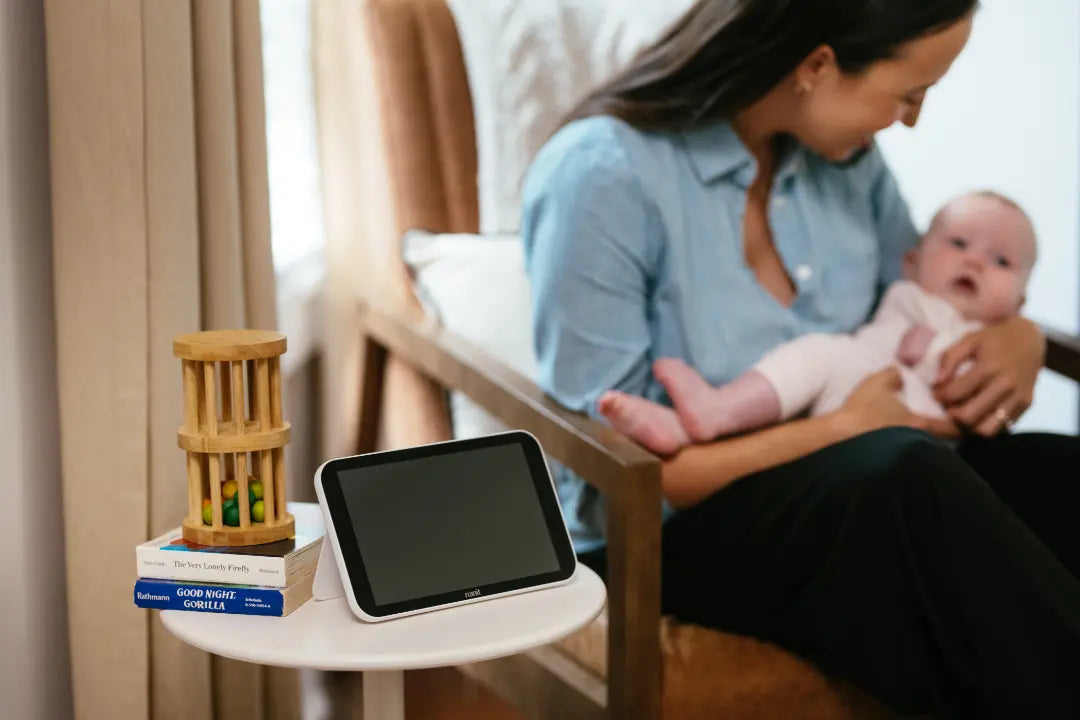
Bedtime cues and monitoring: Bring a favorite bedtime book or portable white-noise machine to anchor your evening routine. Keep your monitor, power adapters, and required accessories together in transit. For a travel-ready option, Nanit’s Travel Bundle packages its portable monitoring setup in a protective case.
5. Health and documents
-
Medications and first aid: Keep prescriptions, dosing syringes, a digital thermometer, nasal saline, and any pediatrician-approved medication your baby may need in your primary diaper bag rather than checked luggage. Having a compact first-aid kit on hand lets you address unexpected discomfort or minor symptoms during the journey and immediately upon arrival.
-
Identification and records: Store your baby's identification, health insurance cards, flight details, emergency contact list, and any necessary travel consent forms in an easily accessible pocket. Avoid placing irreplaceable health records or essential medications into checked baggage.
What baby essentials are allowed on a flight?
Most everyday baby items, from diapers and formula to strollers and car seats, are permitted on flights, but you are dealing with two separate sets of rules.
Airport security regulates what can physically pass through the screening checkpoint, while your specific airline decides carry-on limits, gate-checking policies, and how gear is handled on the plane for baby travel.
Does a diaper bag count as a carry-on?
Diaper bag policies vary significantly by airline, ticket tier, and flight route. Certain carriers, like American Airlines, allow one diaper bag per child without counting it as a carry-on or personal item, whereas others, like Delta, list a diaper bag as a personal item. Always check the operating airline’s current infant-baggage policy ahead of time.
Can I take my baby’s snacks through TSA?
Yes, you can bring solid snacks, baby food, purées, formula, and breast milk through security screening. The TSA explicitly exempts breast milk, formula, toddler drinks, and liquid purées from the standard 3.4-ounce (100ml) liquid limit. Declare these items to security officers at the start of the screening lane so they can be inspected separately.
What baby items are free on flights?
Many airlines allow families to check a stroller and a car seat free of charge, either at the ticket counter or at the gate. To guarantee use of a car seat onboard, purchase a seat for your baby and confirm that the restraint is labeled for aircraft use. If you plan to rely on an unoccupied seat, check the airline’s policy in advance. Note that bulky items like portable play yards may be subject to standard checked bag fees depending on the carrier.
Keep in mind that while TSA rules apply across U.S. airports, international airports and overseas carriers may enforce different security liquid limits and baggage guidelines.
Holiday travel tips to save space (and prevent last-minute stress)
Holiday gatherings introduce unique packing challenges across the board, but smart planning can keep your travel load more manageable:
-
Ship bulky supplies ahead: Order diapers, wipes, formula, and gifts directly to your destination to preserve luggage space.
-
Reserve return space: Leave extra room in your bags or pack a collapsible tote for holiday gifts and new items acquired during your stay.
-
Dress safely for travel: Avoid bulky coats under car seat harnesses, as thick padding prevents a tight fit. Instead, layer thin clothing underneath and place blankets over the secured harness, following National Highway Traffic Safety Administration winter car-seat guidance.
-
Perform an arrival safety sweep: Check holiday hosting spaces for low cords, glass ornaments, button batteries, exposed fireplaces, and unsecured medications.
Your 10-minute check before leaving on your trip
Before heading out the door, take a breath and run through this final check:
-
Transit & Safety: Is your travel restraint verified and installed correctly?
-
The Delay Buffer: Can you feed, change, and comfort your baby through an extra six hours?
-
First-Night Rest: Do you have a verified flat, firm sleep space and familiar bedtime cues ready to go?
If you can check those three boxes, you are ready to roll; most everything else can be can be bought or borrowed after you arrive.
Travel can disrupt familiar routines, but thoughtful packing can make nights away from home easier to manage. For more compact monitoring and sleep tools designed for trips away from home, explore Nanit’s travel-ready catalog.
Planning for the Holidays: When Can You Travel with a Baby?