


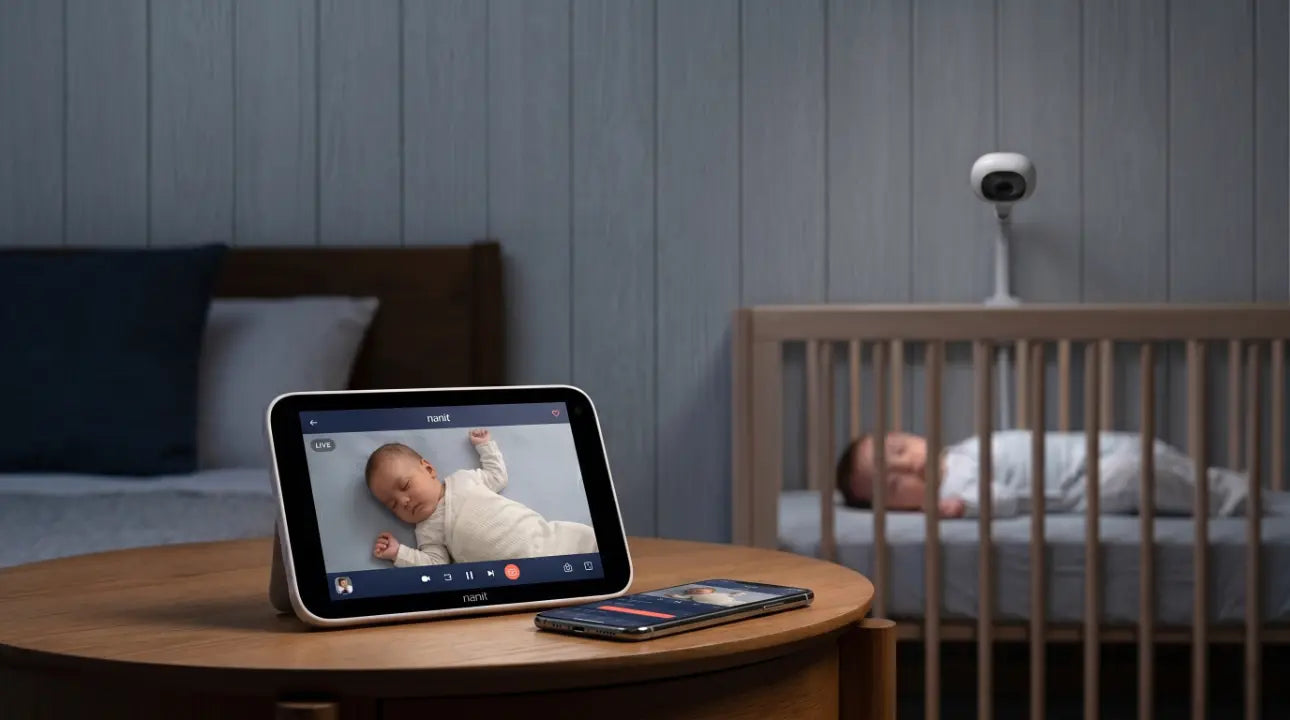
You want reassurance that your baby is safe without turning your phone into an all-night anxiety machine. It’s a delicate balance. Do you need a dedicated monitor screen on your nightstand to feel secure, or is the phone already in your pocket enough?
There is no one “right” or “wrong” answer—only the different fits for different situations.
What you want is to find a setup that reduces your mental load and makes things easier. While many parents assume they have to choose one or the other, modern ecosystems now allow you to monitor from your phone app and use a dedicated home screen.
This means the whole household can check in without someone sacrificing their device, effectively giving you the best of both worlds.
A quick decision framework: what you need your monitor to do
To find what works for you, it helps to look past the hardware and focus on what features and needs you want the smart baby monitor solution to cover.
-
If you constantly worry about Wi-Fi drops or spotty internet connections, you might lean toward a parent unit or a system with local network redundancy.
-
If your life involves travel or long hours at the office, a phone app can be a godsend for portable remote viewing.
-
If you are easily pulled into your phone at night, many parents find that a dedicated screen is safer for their mental health, preventing a quick check from turning into an hour of active monitoring.
-
If you have a village helping you raise your little one, you’ll want to prioritize systems with robust caregiver profiles to avoid having to share passwords or hand over your personal device.
As a rule of thumb, if you want the simplest setup possible, a parent unit usually wins. If you need maximum flexibility to check in from anywhere, the phone app is superior.
But if you have mixed needs—like a partner who wants simple checks while you want data—a hybrid setup is likely the way to go.
Parent unit (dedicated monitor): why some parents still swear by it
A dedicated parent unit is a standalone handheld device that pairs directly with your baby monitor video camera. For many, this approach offers a level of focus that modern tech sometimes lacks, creating a boundary between "parenting tool" and personal devices.
This is where the Nanit Home 8" Display shines. It serves as a dedicated touchscreen for at-home monitoring, pairing perfectly with the Nanit Smart Baby Monitor. It frees up your phone and keeps you connected to the smart ecosystem you rely on.
An argument for simplicity
The biggest draw here is the dedicated, at-a-glance monitoring. You can check on the baby without unlocking a phone or finding an app, which makes all the difference when you are groggy at 3 a.m.
It also means less phone distraction, keeping your brain in "rest mode" rather than tempting you to check Instagram just because you looked at the monitor to check the room temp.
Phone app monitors: best for remote check-ins
Smart baby monitors that utilize your smartphone have become commonplace in modern parenting because they offer features that dedicated hardware often can't match. They also turn the device you already own into a powerful window into your nursery.
Why people love app-based monitoring
The primary benefit is remote viewing, allowing working parents to peek in during a lunch break and traveling parents to say goodnight from a hotel room. Apps also offer incredible scalability, making it much easier to support multiple kids, cameras, and caregivers on one screen.
For the science-minded parent, these apps, like Nanit’s all-in-one parenting app, often integrate sleep insights and tracking to help improve rest. Top-tier apps even support background audio, allowing you to listen to the baby while your phone screen is off, which helps extend battery life.
The friction points
Despite the high-tech features, there are practical downsides to phone apps. Continuous video streaming can cause significant battery drain; you might need to keep your phone plugged in if it's your primary monitor, which can shorten battery lifespan.
Perhaps most importantly, the notifications can be a double-edged sword—it can be easy to start by checking the app and end up "doomscrolling" on social media instead of sleeping.
The hybrid setup: dedicated screen at home + phone app while you’re away
The good news is that you don’t need to choose between reliability and flexibility. A hybrid setup combines the at-home simplicity of a dedicated screen with the remote capabilities of an app.
This is often the "goldilocks" solution for modern families who don't want to compromise.
Why hybrid wins
This approach allows you to keep your phone as a phone while still having a dedicated "window" into the baby's room. You get the quick, distraction-free checks of a parent unit alongside the remote flexibility of a smart monitor. It is a setup perfect for first-time parents with high anxiety, as a dedicated screen on the nightstand reduces phone spirals while the app provides reassurance when you aren't home.
It solves the dilemma for working parents who want remote check-ins without needing the babysitter to troubleshoot a personal phone. And for families with multiple children, a "house screen" lets anyone check on the baby without borrowing someone's mobile device.
How Nanit delivers the best of both options
Nanit is designed to adapt to your family's needs, offering a modular approach that solves the "baby monitor parent unit vs phone app" debate by not forcing you to choose just one.
-
For at-home, low-friction monitoring, the Nanit Home 8" Display acts as your dedicated parent unit. It offers split-screen viewing for multiple cameras and continuous audio, so check-ins don't require handling a phone.
-
When you are away, the Nanit app provides HD video and two-way audio, and allows you to share access with your parenting team via customizable user settings.
Nanit's monitoring solutions also support sleep optimization through sleep analysis, helping you spot trends without obsessing over perfection. You can even integrate controls for white noise and breathing motion monitoring for a complete picture of your baby's wellness.
We also provide two-factor authentication and enterprise-level encryption, which are security must-haves regardless of which device you use.
If you want the ease of monitoring at home and the freedom to check in from anywhere, the Nanit Smart Baby Monitor System gives you both—seamlessly.
Baby Rolls to Tummy While Sleeping: What Should You Do?