


If you’re double-checking your baby’s sleep position every other hour, you’re certainly not alone. It’s completely normal to feel a little anxious about getting your baby to sleep safely—especially when you’re facing an endless stream of sometimes conflicting advice.
While many parents worry about finding the “perfect” way to do things, peace of mind comes from finding science-backed guidance and establishing a few simple, proven habits to help you and your baby sleep safely and comfortably.
In this guide, we’ll walk you through safe baby sleep positions, what to avoid, and what changes when your little one starts rolling, all to assist you in creating a safe sleep environment built on repeatable routines to navigate those long nights.
What is the safest position for babies to sleep in?
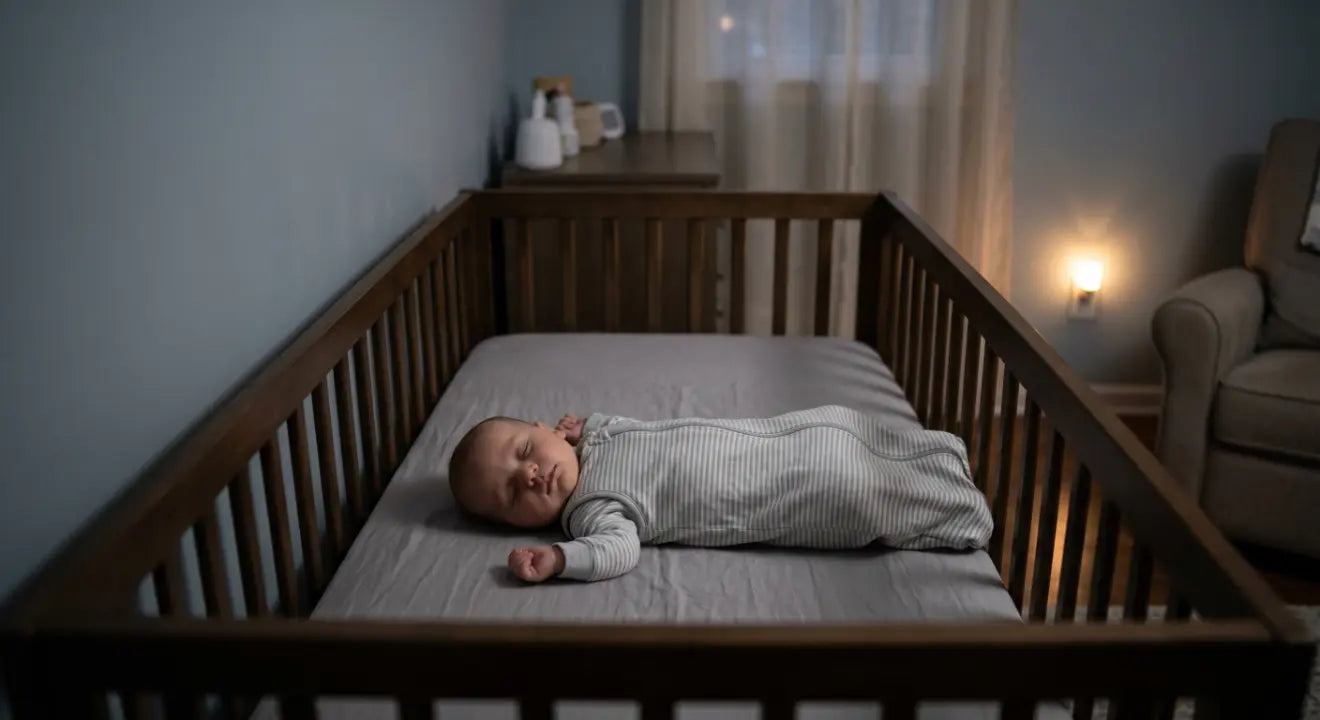
When putting down your baby to sleep, the most effective step you can take is to consistently place them on their back. The American Academy of Pediatrics recommends back sleeping for all sleep times during the first twelve months, including naps and nights, to help reduce the risk of sleep-related infant deaths.
To build a secure and safe infant sleeping environment, focus on these foundational guidelines:
-
Always start with a back sleep position for every single sleep session.
-
Use a firm mattress within a flat sleep surface, such as a baby's crib, bassinet, or portable play yard.
-
Cover your crib mattress with nothing more than a tightly fitted sheet.
-
Keep the sleep space entirely bare by removing loose bedding, soft toys, bumper pads, and stuffed animals.
-
If you want to keep them warm, keep the room temperature between 68°F and 72°F, and consider using a wearable sleeping bag instead of loose blankets.
Consistency matters immensely when it comes to safe sleep guidelines. Make sure everyone who cares for your baby knows to place your baby on their back every time.
Which sleeping position is not good for babies?
To maintain a safe sleep space and minimize risks, certain positions and products should be kept out of the sleep routine. When putting your baby down, avoid these setups:
-
Avoid using a side sleep position as a starting point. This posture is highly unstable and makes it much easier for your baby to accidentally roll onto their stomach.
-
Avoid stomach sleeping when initially placing your baby down, unless your pediatrician has given you specific medical reasons to do otherwise.
-
Steer clear of sleep positioners, wedges, or anti-roll products. These soft objects don't align with safe sleep practices and can compromise a safe sleep surface.
It’s incredibly common to feel like they sleep better another way, especially during fussy nights. However, these safer defaults are the best way to support an infant's sleep journey.
When baby starts rolling: what to do at bedtime and overnight
The day your baby rolls over for the first time signals an exciting milestone, but it often brings a new wave of questions about their own sleeping position.
The fundamental rule remains the same: always place your baby on their back at the start of sleep. If they end up shifting during the night, here’s a simple plan to follow:
-
Keep starting on their back: Even if you know your baby rolls onto their stomach during the night, continue to place them on their back first.
-
Make the crib roll-ready: Ensure the baby's environment is completely clear. A firm mattress with a fitted sheet—and zero soft objects, weighted blankets, or stuffed toys near your baby's face—means they can safely explore their new mobility.
-
Stop swaddling: Once your baby shows signs of rolling but is not yet fully able to do so, transition them out of the swaddle so their arms are free to help them move and breathe more easily.
-
Tummy time training: Practice tummy time during the day to help your baby develop the skills and muscles needed to reposition when they roll.
You don't need to spend your night constantly flipping them back over. Once babies can comfortably roll from back to stomach and stomach to back on their own, it’s generally okay to let them choose their favorite position, provided their sleep space is safe.
A note on reflux and "back sleeping" worries
It’s totally understandable to worry about back sleeping if your little one frequently spits up. Many parents worry that a back sleep position increases the risk of choking, but a baby’s airway is actually built to protect them. To ease your mind, keep these points in focus:
-
Most babies naturally protect their airways better when sleeping on their backs because of the anatomy of their windpipe and food tube.
-
Avoid elevating the crib mattress or using wedges, as these can cause your baby to slide into an unsafe position.
-
Sticking to a flat, firm surface remains the safest sleeping position for nearly all infants.
If your baby was born preterm, born prematurely, or has specific airway conditions, always ask your clinician if you need a personalized, medical-directed sleep plan.
Nights and feeding: room-sharing basics
Keeping your baby close during the night makes feeding and comforting much more manageable, especially when you’re sleep-deprived.
The safest baseline for room-sharing is to have your baby sleep in the same room as you, but on a separate firm, flat surface for at least the first six months. To make nighttime routines smoother while following safe sleep practices, try these habits:
-
Set up a baby's crib or bassinet next to your bed rather than “bed sharing” or sleeping in the same bed, which carries higher risks.
-
When you bring your baby into your bed to feed or comfort them, simply return them to their own sleep space afterward.
-
Always place them to sleep on their back, even if they fall asleep in your arms or chest.
Make safe sleep easier to stick to when life is busy
Balancing work, caregiving, and daily chores means you need routines that work reliably without adding to your mental load. Setting up a predictable environment helps you and your parenting village stick to safe baby sleep positions effortlessly. Consider these practical supports:
-
Set a firm default for every nap and night: back position, firm mattress, and a bare sleep space.
-
Share a simple, one-screen checklist with anyone who puts the baby down, ensuring grandparents or babysitters follow the same rules.
-
Keep your wind-down routines consistent, using the same cues and order, so your baby learns to expect sleep.
-
For daytime supervision, use remote check-ins to monitor your baby’s sleep space without risking waking them.
Tools like the Nanit Smart Baby Monitor can also help caregivers stay aligned with shared access and make it easier to check in remotely. While safe sleep fundamentals remain the same, the right setup can help you build a restful routine that supports your entire family.
How To Improve Your Baby’s Sleep: 5 Simple Strategies That Can Make Nights Easier
The Surprising Reason Parents Aren't Sleeping (It's Not Just the Baby)