


Midnight care can feel like a high-stakes movie heist. You need to see what you’re doing during a diaper change, but flipping on a switch would wake up the guard, and using your phone flashlight just ends in a clumsy juggling act.
A good baby night light is there to provide assistance without added inconvenience.
While they can be pretty, these lights aren’t there as nursery decor but as a tool to support your caregiving without wrecking everyone’s rest.
In this guide, you’ll learn exactly when you need a night light, which features actually matter, and how to set it up to keep those midnight wakes brief and sleepy.
What a baby night light is really for (and when you can skip it)
While the glowing lamps you see on social media can be beautiful, the true purpose of a night light is functional: helping you navigate the dark safely and providing just enough light to care for your little one without triggering their brain to think it’s morning.
More specifically, a night light typically helps with:
-
Night diaper changes and feeds, giving you visibility without the harshness of overhead lamps.
-
Quick reassurance checks, letting you peek at your sleeping baby without risking a creaky floorboard or waking them with a bright light.
-
Helping toddlers orient themselves if they wake up and managing their fear of the dark.
When you might skip it:
If your baby sleeps soundly in a pitch-dark room and you can navigate safely without extra illumination, you typically don’t need a night light at all. In fact, total darkness promotes healthy melatonin production, which helps your baby settle and stay asleep. Unless your little one has developed a genuine fear of the dark (which usually doesn't happen until toddlerhood), a dark room is often best for triggering sleep mode.
How lighting needs change as your baby grows:
-
In the first 0-3 months, the night light is really for you. You’ll be up frequently for late-night feedings and changes, and a dim light helps you navigate the room safely without stubbing a toe.
-
As your baby moves into the 4 to 12-month range, they become much more aware of their surroundings. Bright lights can be incredibly stimulating at this age, so it becomes crucial to keep illumination indirect and barely there to avoid distractions.
-
Once they reach toddlerhood (12+ months), the role of the light shifts again. A soft, gentle glow light can transition into a comfort object, helping kids feel secure in their room if they wake up during the night.
The night light checklist: 5 things that matter most:
A "cute" light might look sweet on a shelf, but if it emits blue light or you can’t adjust brightness, it’ll disrupt sleep rather than support it. Details like these can be a big deal for sleep hygiene, so here’s a quick checklist of desirable features to help you find the best night light for your family:
-
Warm color, not blue-toned: Look for warm white, amber, or red light options. Unlike blue-spectrum light (which mimics daylight), these tones are less likely to suppress melatonin, making them a must-have for your nursery. It’ll help make the process less disruptive during middle-of-the-night checks.
-
True dimming: The lowest brightness or night light mode should be barely there; just enough light to function, not enough to cast shadows or brighten the whole room. You want a calming glow, not a beacon.
-
Simple controls: A simple tap/touch control interface and remote programming features let you operate with one hand while holding a fussing baby. Look for features like a double-tap to turn on/off and app-supported settings so you aren't fumbling with tiny switches or needing to read a user manual in the dark.
-
Timer/auto-off: A timer prevents the light from staying on all night if you accidentally fall asleep after a feed, helping preserve the darkness your baby needs.
-
Safe + practical: Ensure it uses cool-to-touch LEDs and, if portable, is made of durable materials. A rechargeable battery with a long-lasting battery life can be a total game-changer for parents on the move.
Which type fits your routine?
-
Plug-in: Ideal for consistency in a dedicated spot; you never have to worry about the battery.
-
Portable: Perfect if you need to move the light from the changing table to a nursing chair. Look for USB-C charging for convenience.
-
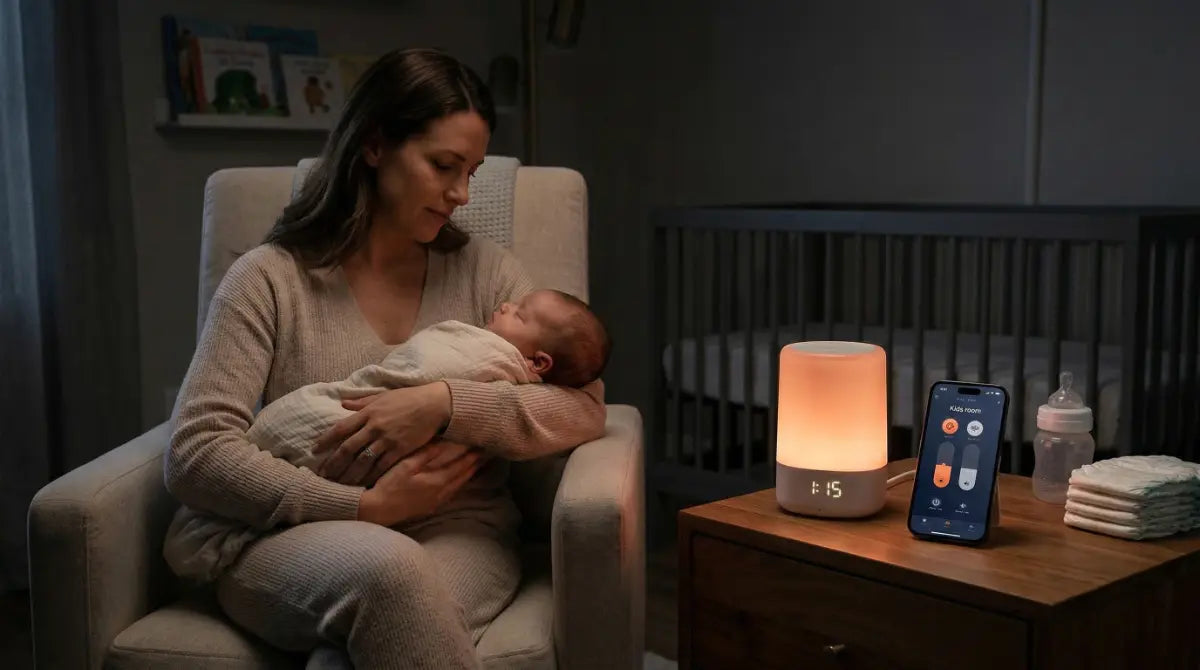
Routine-friendly setups: If you want to streamline your setup, the Nanit Sound + Light Machine doubles as a sound machine with white noise. It comes with features like an "OK to wake" clock, brightness levels, and color options that you can program and control directly from the app to simplify your routine.
What’s the best spot to place your night light?
You're going for ambient visibility, not a crib spotlight. Even the perfect night light can become a disturbance if placed incorrectly.
Finding the best placement is all about keeping the light helpful without disrupting. Try placing it behind you near the rocker to indirectly illuminate your hands or lap for tasks, while keeping your baby’s face in the shadows. Alternatively, placing the light across the room, or partially blocked by furniture, can diffuse the beam and create a soft light that fills the room without a harsh source point.
For older children, a low placement near the floor helps them see the path to the door or bathroom without shining in their eyes. Whatever you do, avoid shining the light directly into the crib or using overhead lights for care, as these are strong signals that it is "playtime" or morning.
Common mistakes to avoid with your night light
You want to avoid accidentally derailing sleep with lighting choices that seem helpful in the moment but work against your baby’s biology:
-
Using a light that is too bright "just in case" you need to see better. This risks fully waking your baby.
-
Using blue/cool "daylight" bulbs or settings during the night.
-
Placing the light in the baby's direct line of sight.
-
Leaving a portable light on the mattress (always follow safe sleep guidelines and keep the crib bare).
-
Making the light a toy for kids by changing colors frequently at bedtime.
Turning down the lights (and the stress)
Choosing the right baby night light isn't complicated, but it requires prioritizing function over form. Remember to look for warm tones, true dimming capabilities, easy controls, and place it where it helps you see without shining in your baby's eyes.
Step 1: Tonight, double-check your nursery lighting. Dim your current light significantly and move it out of your baby's direct sightline to reduce stimulation.
Step 2: If you want to simplify your routine, explore tools like the Nanit Sound + Light Machine. Integrating sound and light cues with your Smart Baby Monitor can help you build a consistent sleep environment that helps the whole family rest easier.
Can You Get Pregnant After Ovulation? What to Know About Timing
Nanit Clips are here!