


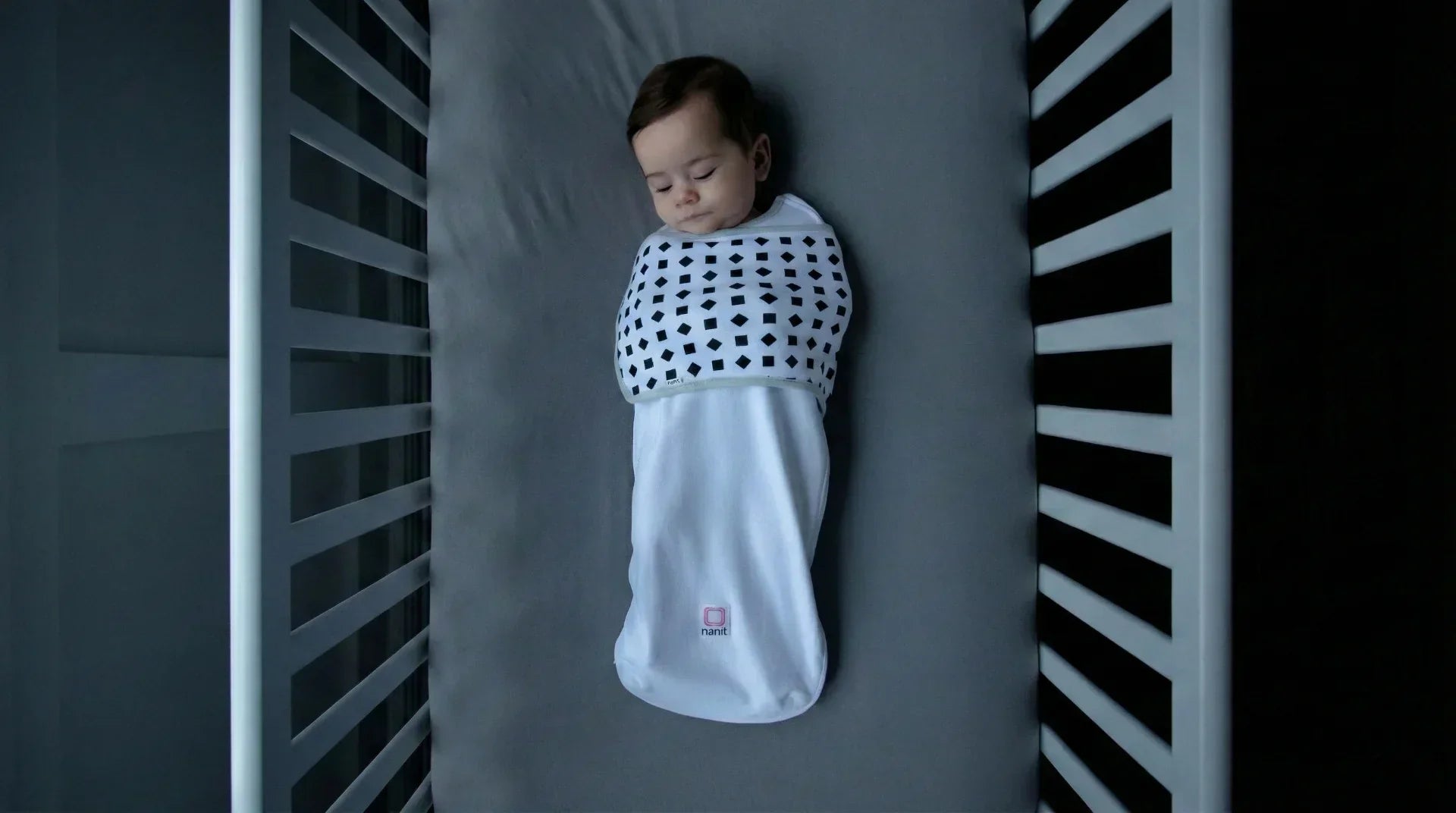
If you are late-night Googling "are Velcro swaddles safe?" you’re not alone—the sheer volume of conflicting takes and advice can be overwhelming! But take a deep breath: asking these questions just shows how much you care and how important it is to get these things right.
The short answer is yes—Velcro swaddles can be safe when used correctly and in alignment with safe sleep guidelines.
While traditional blanket swaddling requires a bit of origami-like skill, Velcro swaddles (often called "quiet" or "easy" swaddles) offer a structured, secure fit that many parents find easier to master. However, safety isn't determined by the presence of Velcro, but by how the swaddle is used.
The reality is that safe sleep for your baby relies on a few fundamental rules, not on materials or perfect execution. By focusing on proper fit, temperature regulation, and mindful use, you and your baby can benefit from these tools with confidence.
Why Velcro swaddles get so much attention (and anxiety)
Swaddling is designed to mimic the cozy pressure of the womb to calm the newborn's startle reflex. Yet, Velcro options often spark specific questions because they feel structured, faster to apply, and leave less room for fabric to unravel.
The general mistrust you find online about them often stems from the idea that because something is easier, it might be less secure. Or conversely, that the fasteners make it too restrictive.
Yet for new or exhausted parents, this design is a lifesaver. Fasteners ensure a consistent fit every time, reducing the user error that comes with manually tucking a large blanket at 3 AM. It also allows for a quick re-swaddle after a feed, keeping everyone in a sleepy, low-stimulation state.
Still, it is that structure that sometimes sparks worry: Is the swaddle too tight? Is the fabric too thick? It helps to remember that anxiety often comes from the pressure to get everything "right," rather than any immediate danger.
Asking these questions shows that you are an attentive and protective parent, and a bit of knowledge and understanding will go a long way toward confident, informed choices.
The non-negotiables for safe swaddling (Velcro or not)
Clarity is the best antidote to worry! Whether you use high-tech fasteners or a simple blanket, the rules remain the same.
Most safety guidelines, including those from the American Academy of Pediatrics (AAP), focus on clear airways and temperature regulation, and the core requirements are straightforward:
-
Always place the baby on their back: This is the most important rule for naps and nighttime sleep. Anatomy helps here: on the back, the windpipe sits atop the esophagus, providing a natural, unobstructed path for breathing.
-
Use a firm, flat surface: The crib should be free of pillows, blankets, bumpers, or toys. A "firm" surface shouldn't indent when your baby lies on it. "Flat" means no inclines to prevent head slumping.
-
Keep the swaddle snug, not tight: A loose swaddle can be a riskier hazard than a snug one, yet you should be able to slide two or three fingers between the swaddle and baby's chest. This ensures security without restricting breathing.
-
Stop swaddling at the first sign of rolling: As soon as your baby attempts to roll, their arms must be free to push up safely. This is a crucial safety milestone that happens at different ages for different babies, so be attentive to their cues!
-
Monitor temperature: Check your baby’s chest or neck (not hands) to ensure they aren't overheating. Sweating or damp hair are signs to remove a layer immediately.
-
Avoid weighted products: Stick to standard, non-weighted swaddles and sleep sacks. Weighted items can restrict chest movement in young infants and are not recommended.
3 Steps for getting swaddling right: snug, comfortable, and breathable
When asking "Are velcro swaddles safe for newborns?", the answer often requires a caveat on the fit. A loose swaddle can slide over the face, while a tight one can restrict breathing or limit natural hip movement.
Velcro swaddles are meant to simplify this balance, but you still need to check physical cues. You want a gentle hug, not a straitjacket.
-
Start with the chest check: ensure the swaddle is secure around the torso but allows the chest to rise and fall easily.
-
Then, check for hip mobility: Legs should never be forced straight down; they need room to bend up and out (the "frog" position).
-
Finally, use layering logic: Velcro swaddles often add warmth, so depending on the temperature of the room, consider a lighter onesie underneath rather than fleece pajamas.
Beyond that, there are swaddling products designed with features to help you and your baby rest easier. For example, our Breathing Wear line has a swaddle that can track the motion of your baby’s breathing for better monitoring and peace of mind.
When to stop using a Velcro swaddle (and what comes next)
As your baby grows up, transitioning out of swaddling is an equally necessary safety step as mastering it. You must stop swaddling as soon as your baby shows signs of attempting to roll over.
This typically happens between 8 weeks and 4 months (physical capability matters more than age here). Once a baby can roll, they need their hands free to push their upper body up or roll back if they end up on their tummy, so a timely transition is important.
That said, you can make this change gradually to make things easier:
-
One Arm Out: Swaddle with one arm out for a few nights. This introduces freedom while maintaining torso comfort. If they startle awake, switch arms the next night.
-
Both Arms Out: If the product allows it, you can wrap the swaddle around the torso only, with both arms free to dampen the startle reflex.
-
Switch to a Sleep Sack: Transition to a wearable blanket, like our Breathing Wear Sleeping Bag.
Sleep might be disrupted briefly during these changes, but view this as a graduation! Your baby is getting stronger, after all.
The takeaway: safe sleep doesn't have to feel complicated
Alongside things like baby monitors and sound machines, Velcro swaddles are just another useful tool in your parenting toolkit. And they are perfectly safe to help soothe your baby when used properly.
For that, just focus on the fundamentals—back to sleep, a clear crib, and a proper fit—and be ready to make the switch as your baby continues to develop their own rolling skills.
Parenting is full of variables, but your intuition and attention to these core rules are your best guides. Keep yourself informed and trust yourself to make the right calls.
By using tools that simplify your routine and systems that support your peace of mind, you set the stage for better sleep—for your baby and for you.
Halfway There! Your Guide to 20 Weeks Pregnant
Anxiety About Baby Sleeping: How to calm the spiral without chasing "perfect" sleep